

You can't taste a photo. That's the catch with most cafe marketing ideas: they ask a stranger to imagine your sourdough, your flat white or your lemon myrtle shortbread from a square on her phone. The moment someone actually tastes it, the job gets easier, because the food does the persuading for you.
This playbook is for cafes, bakeries, coffee roasters and local producers of honey, jam, sauces, chocolate, nuts, cheese and the like. A Paint Juicy ("Paint") night serves as the example throughout, and the groundwork applies just as well to markets, festivals and community events.
Before any tasting: food safety, allergens and the venue's yes
Sort this before you plan a single bite. It's the difference between a lovely moment and a very bad night.
Event food follows the same rules as your shop
Food Standards Australia New Zealand's guidance on temporary food premises says businesses selling at markets or events need to meet the same food safety requirements as other food businesses, regardless of the size of the business or how often it sells food, and that you must notify your local council before you start. The same page covers the habits worth drilling into anyone handling samples: don't handle food if you're sick, wash and dry hands thoroughly, keep raw food apart from ready-to-eat food, and keep potentially hazardous food at 5°C or colder, or 60°C or hotter.
The NSW Food Authority adds that local councils are generally responsible for approving temporary events, and suggests checking their specific requirements well before the event. Whether your particular tasting counts, and what it needs, is a question for your council, so ask early rather than assume a sample is too small to matter.
Allergens: say it plainly, every time
FSANZ's page on allergen labelling for food businesses explains that new requirements came into force on 25/02/2024. Packaged food declares allergens in bold in the ingredient list using required names such as "milk", with a separate summary statement beginning "Contains". For food that doesn't need a label, such as cafe or takeaway items, allergen declarations must be displayed with the food or provided when the customer asks. The NSW Food Authority's markets and events page puts the bottom line bluntly: if you are not 100% certain you can provide an allergen-free meal, you must tell the customer.
In a busy room, keep it simple: individually wrapped samples with clear labels, plus a printed ingredient card on any board. Nobody should have to shout a nut question over a chorus.
The venue decides
Paint nights run in venues, and every venue has its own kitchen, menu, licence and rules. Samples happen only with the venue's approval, and some venues won't allow outside food at all. Ask early, accept a no gracefully, and fall back on a sealed take-home sample or an offer instead.
Will your sample survive the handbag?
Food that shines at a market stall can struggle in a room full of wet paint and handbags. Before committing, test your sample against this list:
- Sealed and individually packed, so it can sit in a bag for hours.
- Shelf-stable at room temperature, because nobody wants to find warm cheese in her bag on Sunday.
- Labelled with your business name, ingredients and allergens in plain words.
- Eaten without cutlery or crumbs everywhere, or taken home unopened.
- Mild in smell, so it doesn't take over the room.
- Sturdy enough to survive the trip home without leaking.
- Carrying a clear next step: a code, a QR or the name of the shop where she can buy more.
Our guide to planning a product sampling campaign walks through quantities, timing and follow-up, and the product sampling events page explains how samples and goodie bags work at Paint.
Why food belongs at a singalong
People bond over food and music, and a Paint night serves up plenty of both. Most guests are women, and the ages run from early thirties to the far side of eighty. They settle in with friends for up to 3 hours and talk about everything, and "where do you get your coffee?" is a question every friendship group has strong views on.
Food also carries a nostalgic pull that suits Paint's decade themes. The biscuit she ate at her nan's, the bakery that made every birthday cake in town, the jam from the farm gate on the way to the coast: those memories sit right beside the songs. A local business with a long story can lean straight into that.
And every table is a ready-made tasting panel. When one guest loves something, the others try it within seconds. Opinions arrive honest, loud and immediate, which is exactly what a new product needs. On a big night that panel gets enormous. Bundaberg, a town that knows its produce, put 101 guests into one 80s and 90s singalong in May 2026, and that's a lot of honest palates to win over before dessert.
Cafe marketing ideas by where the food ends up
Some food is eaten on the night, some goes home in a bag, and some is a promise she cashes in at your counter. Plan around that, and the right moment usually picks itself.
Tasted at the table
- A wrapped treat at half-time. With the venue's approval, a small individually wrapped biscuit or slice arrives at the break, labelled with your name and its allergens.
- A board while the first layer dries. With venue approval, one person from your business carries a tasting board to each table, with an ingredient card and nothing that needs heating or chilling on the spot.
- A night built on your story. A heritage bakery or family farm could go further with a co-created themed night around the decade it opened, the songs of that era and the town it has fed ever since.
Carried home in her bag
- Tomorrow's first cup. A sealed sachet of your roast or a drip bag turns her Sunday coffee into a tasting.
- A sample with a story. A small sealed jar, a honey stick, a spice sachet or a single wrapped chocolate, with a card saying where it was made and which local shops stock it.
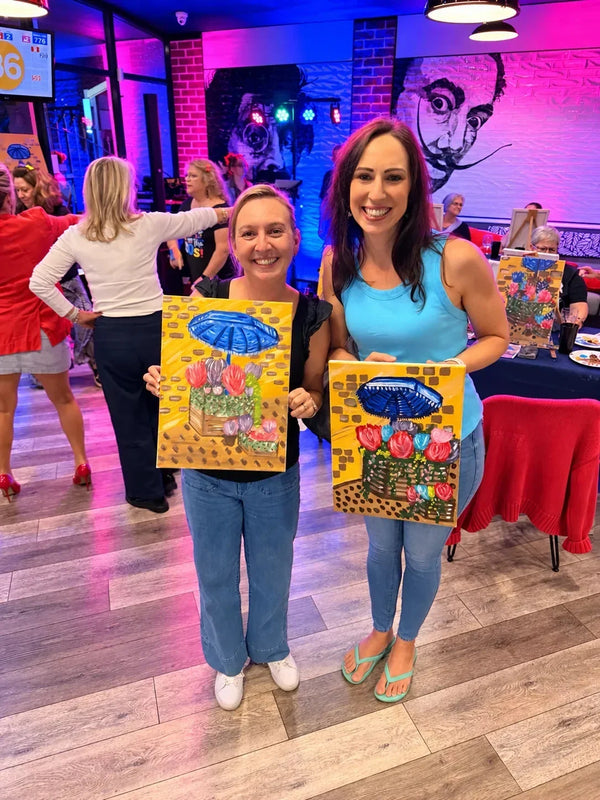
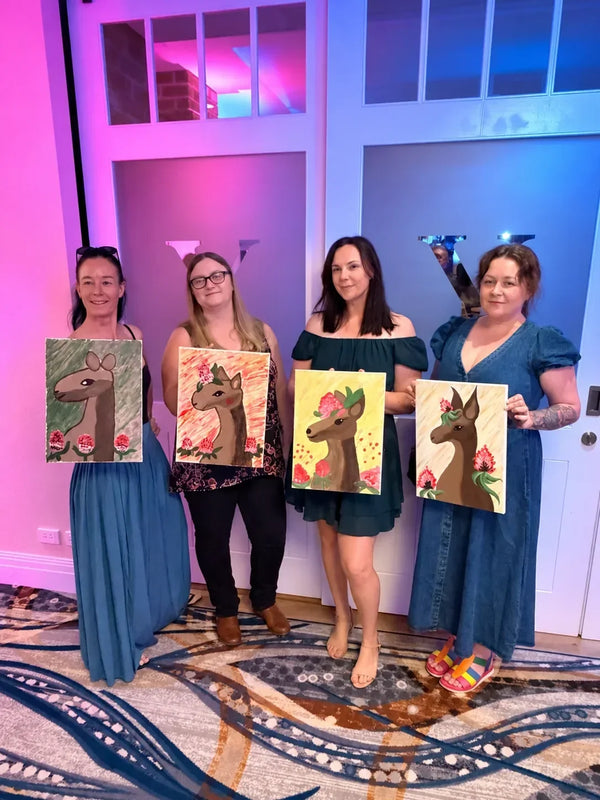
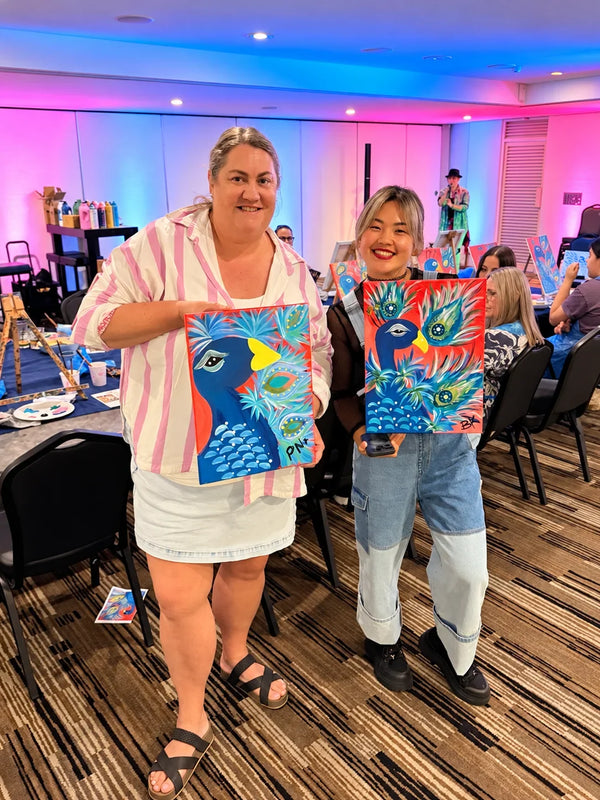
- Paint where it grows. Through sponsored artwork, guests paint your world: macadamia rows, a beehive in a flowering paddock, a strawberry patch at sunrise. The canvas then hangs in her home as a reminder of where good food comes from.
- A hamper for the best painting. The host names the standout canvas on skill, your hamper goes to the painter, and your business gets a thank-you from the front.
Cashed in at your counter
- Canvas show-and-tell. Your page in the Town Pass invites guests to carry their finished canvas into the cafe within a fortnight for a treat on the house. She gets to show off, your staff get to admire it, and a first visit happens for a fun reason.
- Tomorrow's brunch, announced tonight. A short spot in Paint's radio session as guests pack up, voiced by the owner, invites the room for breakfast. Back it with a code that's only good for the next few days.
- A quiz on the town's food story. From the year the oldest bakery opened to the region's best-known crop, questions like these give your name a natural slot. The sharpest table takes home a cafe voucher.

Tastings that turn sour
Not every good food idea suits a seated night of up to 3 hours with paint on everyone's hands.
- Hot food, or anything needing temperature control at the table. The risks aren't worth it, and the venue's kitchen exists for a reason.
- Anything that competes with the venue's menu. If the venue sells cake, don't bring cake. Talk to them and find something complementary.
- Open bowls of nuts, lollies or anything people dip their fingers into. Hygiene trouble and allergen trouble in one.
- Sticky, saucy or crumbly food near canvases. Nobody wants caramel across her sunset.
- Selling on the night. A queue at a card reader turns a tasting into a market stall.
- Health or diet claims. Talk about taste, provenance and the people who make it. Weight-loss products are on the list of categories CONNECT doesn't accept.
- Alcohol pairings. Drinks carry their own rules, licences and age limits, all covered in our event marketing for drinks brands post.
Counting coffees, jars and repeat visits
A cafe and a producer measure success differently, so set up tracking that matches your business.
Cafes and bakeries: count visits
Give every event its own code or offer, ask staff to note it at the counter, and tally redemptions over the following weeks. Canvas show-and-tell visits are the easiest to spot, because the canvas walks in with her. Then watch whether those guests return a second and third time, because a regular is worth far more than one free treat.
Producers: follow the product
Your sale often happens in someone else's shop, which makes counting harder. Try:
- A unique code for your online store, printed on the sample card.
- A quiet word with local stockists before the night, asking them to tell you if they notice a lift afterwards.
- Sign-ups to your own mailing list through a QR on the card, with a real reason to join, such as a recipe collection.
Seasonal producers should line nights up with harvests and busy months; the 2027 marketing calendar lists the dates worth planning around. Paint's own report after each night is described on the Paint Juicy CONNECT hub.

Cafe and producer questions, plated up
Do we need to send staff to hand out samples?
For a tasting at the tables, yes: one friendly person who knows the product inside out, can answer allergen questions properly and can tell the story behind the food. For take-home samples you needn't be there at all. Deliver the packed samples ahead of time and they go into every bag.
Our food is gluten free or vegan. Should we lead with that?
Lead with flavour, and put the dietary detail clearly on the label and card. Guests who need it will spot it, and everyone else will simply enjoy it. A guest who can rarely eat the treats on a night out often becomes loyal once she finds one she can.
Can a cafe partner with a venue rather than compete with it?
Often, and it's worth exploring. Some venues are happy to serve a local cafe's slice or a producer's cheese as part of their own offering, which keeps their kitchen in charge and gives you a credit on the night. It needs their agreement and has to suit their licence and menu.
What can a cafe offer if we have nothing to package?
Your best product is the visit itself, so build around that: a booklet page that rewards the canvas show-and-tell, a voucher as the quiz prize, or a spot in the radio session inviting the room to breakfast. None of it needs a sample, and all of it sends her through your door.
Get your food into a room full of good opinions
Tell us what you make, where it's sold and which towns matter, and we'll put forward the nights and moments that fit, with venue approval built into the plan. Why Paint Juicy CONNECT? Because Paint Juicy connects!
Ask about a food or cafe partnership
Want to line up your harvest or your quiet months with upcoming nights? Check each state's list.
See what's on in each state
Keep reading
-
Drinks brand activation ideas for wineries, distilleries, breweries and alcohol-free makers
Drinks brand activation ideas for wineries, distilleries, breweries and alcohol-free makers, with the ABAC, RSA and licence basics. Read the playbook. -
How to plan a product sampling campaign: nine steps from goal to follow-up
Plan a product sampling campaign that does more than hand out freebies: goal, format, legal checks, follow-up and measurement. Grab the checklist. -
Small Business Advertising: Why Paint Juicy CONNECT Beats Shouting Into the Noise
Radio quotes sting and boosted posts can earn likes, not sales. Put your small business in a room of real people at a Paint night. Let's talk.