

Somebody in a meeting said "we should do something experiential", everyone nodded, and now it's your job to work out what that means. Good news: experiential marketing is simpler than the jargon suggests, and plenty of Australian businesses already do it without the fancy name. The butcher grilling samples outside the shop on a Saturday morning? Experiential. The cellar door tasting? Experiential. The cosmetics counter that lets you try a shade on the back of your hand? You guessed it.
This guide covers what experiential marketing is, where it earns its keep, where it doesn't, and how to decide whether it belongs in your plan. We'll be upfront about the downsides, because we'd rather you spend well than spend with us for the wrong reasons. (We're Paint Juicy, and through Paint Juicy CONNECT we invite brands into our paint and sip nights, so yes, we have skin in the game.)
What is experiential marketing?
Experiential marketing is marketing people take part in rather than simply watch. Instead of describing your brand in an ad, you create a moment where customers can see, hear, taste, touch or do something with it, ideally somewhere they're glad to be. The aim is a memory, not just a message.
You'll also hear it called engagement marketing, live marketing or brand activation. The labels overlap, but one test cuts through them: if a customer walks away having done something with your brand, rather than having been told something about it, you're in experiential territory.
How it differs from advertising, sponsorship and sampling
- Advertising buys attention and fills it with your message: a spot, a billboard, a post in someone's feed.
- Sponsorship buys association: your name sitting beside something people already love.
- Sampling puts the product physically in someone's hand.
- Experiential marketing wraps a moment around the brand, and it often borrows a little from all three.
A handful of sachets thrown at commuters is sampling. The same product tried at a relaxed table among friends, with someone explaining why it's good, is an experience.
Formats you'll see around Australia
- Pop-up shops and brand spaces in shopping centres, laneways and festival precincts
- Tastings, try-ons and demonstrations, in store or at events
- Hands-on workshops and how-to sessions
- Product launches run as events with a guest list
- Roadshows that tour several cities or regional towns
- Installations designed to be photographed and shared
- Brand moments hosted inside someone else's event, such as a festival, a community day or a night out
That last one is often overlooked, and it changes the maths.

Why businesses use experiential marketing: the genuine upsides
People remember what they do
A hand cream she rubbed in, a drink she tasted, a gadget she figured out with her own fingers: each leaves a richer trace than a line of copy. You're no longer asking her to imagine your product. She already knows how it feels.
The setting does some of the persuading
Context colours everything. Meet a brand while you're stressed in a queue and it picks up a little of that stress. Meet it while you're laughing with friends and it picks up the laughter instead. Strong experiential work chooses the setting as carefully as the message.
It gives people something to talk about
An experience comes with a story attached: where she was, who she was with, what happened. Stories get retold, photographed and posted without you paying for each mention. You can't control that, and shouldn't fake it, but a genuinely good moment travels much further than a forgettable one.
You get instant, honest feedback
Run an ad and you wait for the dashboard. Put your product in front of people and you watch their faces. Do they pick it up twice? Pass it to the person beside them? One evening of real reactions can teach more than a month of reports.
The honest downsides
Here's the part the glossy proposals tend to skip.
It costs more per person reached
Experiential marketing reaches far fewer people than a broad media buy, and each person costs more to reach. You're trading breadth for depth. Telling a whole city about new trading hours? Wrong tool.
Turnout is a risk when you build from scratch
An event you create yourself needs an audience, and audiences don't arrive on cue. Rain, a clash with the footy or a long weekend can leave a well-designed activation playing to an empty space, and promoting your event can cost as much as running it.
Measurement needs planning upfront
Clicks are easy to count. Feelings aren't. If you don't decide what success looks like before the day, you'll finish with a folder of lovely photos and no answer when the boss asks what it achieved.
Done badly, it's intrusive
Nobody enjoys being cornered by an overeager promo rep. An activation that blocks people's path or pushes them into a sign-up does more harm than staying home. An experience should feel like a gift, never an ambush.
It's fiddly to run
Permits, public liability insurance, stock, staff, venue rules and, if drinks are involved, liquor licensing. All manageable, all time-consuming, and small teams often underestimate the load.
How small and big brands use it differently
Small businesses: local, personal and nimble
A small business rarely needs a branded truck. It needs the right room of people. Think of a florist running a posy-making morning, a café hosting a tasting of its new blend, a boutique holding a styling evening for regulars, or a local business slipping a genuinely useful voucher into an existing event's gift bag.
Small has real advantages: the owner is often in the room, the follow-up visit is a short drive away, and nobody needs a committee to try again next month.
Larger brands: scale, consistency and new markets
National brands tend to reach for experiential work when launching a product, entering a new region or reshaping how people see them, often touring several cities or partnering with events that already draw their customers. Their challenge is keeping it personal across dozens of locations. Big or small, start with what the audience wants, not what the brand wants to say: if a moment exists only to carry a logo, people can tell within seconds.
How to judge whether experiential marketing suits your business
Ask yourself six questions before you commit budget.
- Does your product improve when people try it? If a photo tells the whole story, you may not need the experience.
- Can you find your customers gathered together, in a room or at an event where you can meet many at once?
- Is there an obvious next step? A tasting with nowhere to buy is a party, not a campaign. Know where she goes tomorrow: your shop, your booking page, a stockist in her town.
- Can you staff it with people who represent you well? They are your brand on the day.
- What will success look like? Pick one or two measures before you start, not after.
- Can you be patient? Some of the value arrives later, through word of mouth and repeat purchases.
Mostly yeses? It's worth a test. Start small, measure honestly, then scale what works.
Stuck on question five? The FAQ below covers measurement, and our page on product sampling and goodie bags shows how per-town codes make a night's response traceable.
Build your own audience, or borrow one
Build: you create the event, choose the venue and give people the reason to come. Full control, and full responsibility for whether anyone shows up.
Borrow: you join an experience someone else already runs, such as a festival, a market, a club day or a night out. The host's rules come first, but the audience arrives already wanting to be there.
Borrowing works best when the host's audience genuinely matches your customer, your brand adds something rather than sitting on top, and the paid relationship is out in the open. That last point isn't just good manners: the AANA Code of Ethics, the Australian advertising industry's self-regulatory code, says advertising must be clearly distinguishable as such. Any host worth partnering with will insist on it.
Where Paint's rooms fit
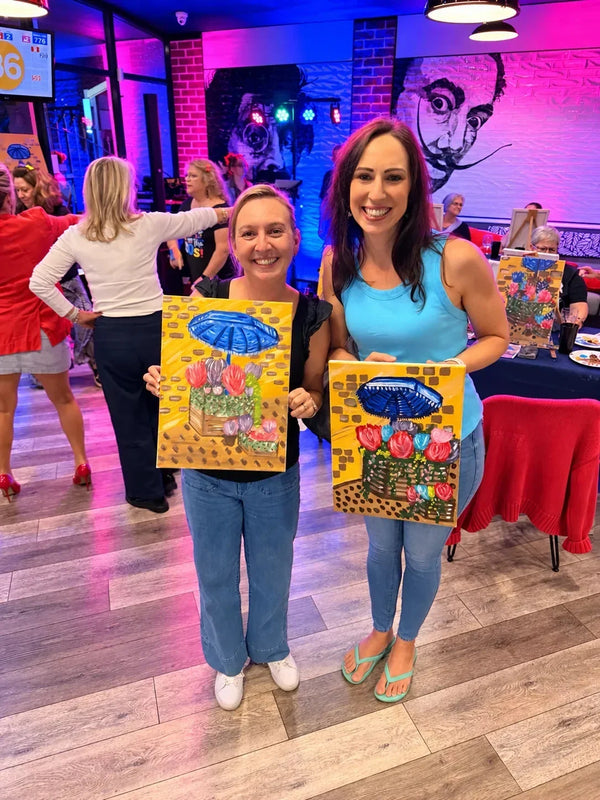
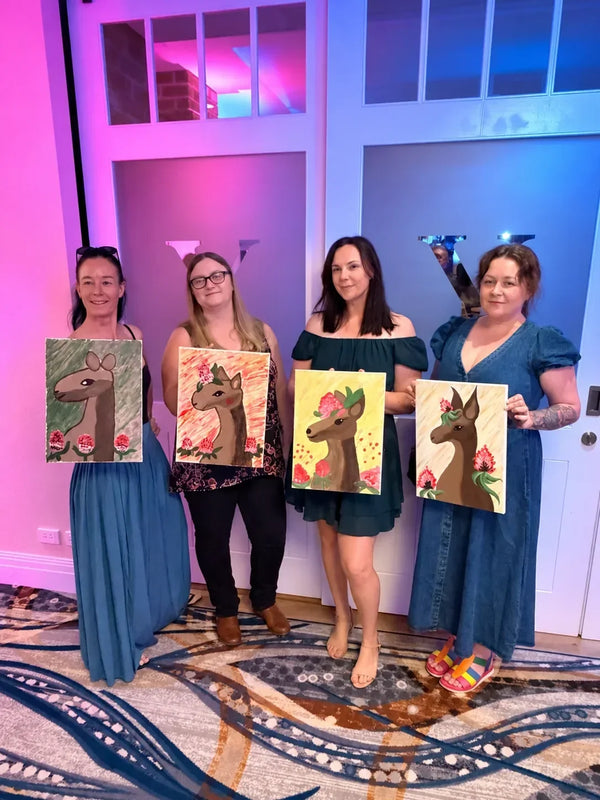
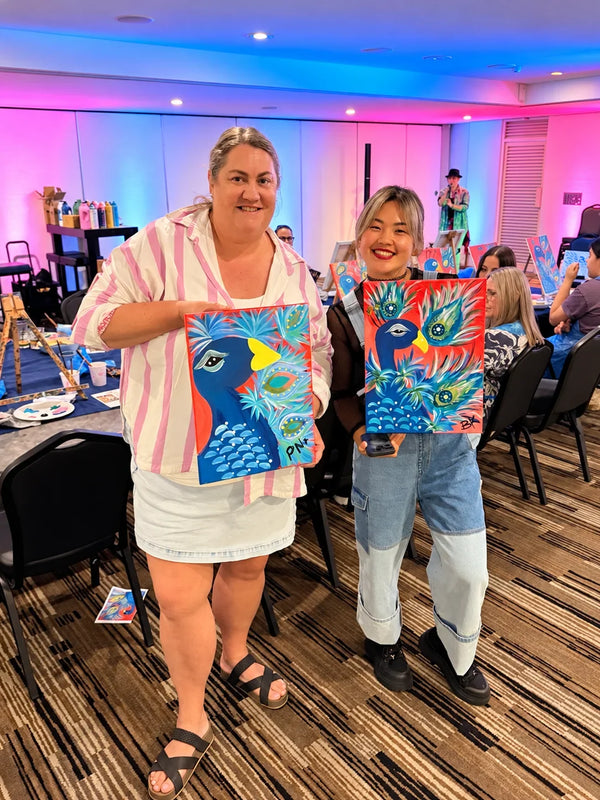
Paint Juicy takes paint and sip nights on the road to towns and suburbs in Queensland and New South Wales. For up to 3 hours, guests, mostly women in their thirties through to their nineties, paint, belt out songs from their favourite decades and catch up with whoever sits beside them. Our biggest rooms run past 100 guests, from Brisbane's west down to the Hunter. 45,000+ happy painter guests have been through our nights, and we hold 4.9 stars on Google.
In this guide's terms, a Paint night is the borrow route with the turnout already sorted. A brand can join at whatever size suits it: a useful product in the goodie bag, a moment introduced from the front, a spot in the Paint radio session between songs, a design guests paint with their own brushes through sponsored artwork, or a run of nights across several regional towns. One rule sits above the lot: if it would feel like an ad break to the people who paid for their seats, we leave it out.
Weighing this up against a radio schedule or another round of boosted posts? Our small business advertising guide lays that comparison out properly.

Experiential marketing questions, answered
Is experiential marketing only for big brands?
Not at all. Scale changes the format, not the principle. A national brand might tour a dozen towns, while a local salon might join one well-matched event with a voucher worth using. Both give people a genuine experience of the brand instead of another message to scroll past, and the small business often has the edge, because the owner can be there in person.
How much does experiential marketing cost in Australia?
There's no fair single figure. Costs swing with whether you build or join an event, how many locations you cover, and what goes into stock, staff, creative, permits and reporting. When comparing quotes, ask exactly what's included and how results will be reported. Paint Juicy CONNECT quotes a flat fee per campaign, so you know the full cost before anything happens.
How do you measure experiential marketing?
Decide your measures before the event. The most reliable are counted at your own end: redemptions of a unique code, visits to a dedicated landing page, opt-ins through your own offer and local sales before and after. Add what the organiser can verify, such as attendance and samples handed out. Treat vague "impressions" with suspicion: someone standing near your stand isn't someone who engaged.
Is experiential marketing the same as event marketing?
They overlap without being identical. Event marketing usually means promoting or running an event, from a conference stand to a launch party. Experiential marketing describes the goal: letting people take part in your brand. Plenty of events offer no real experience of the brand, and plenty of experiences happen in store or on the street.
Put your brand where the good night already is
You don't have to build an event from nothing to give customers a genuine experience of your brand. Tell us what you sell, who you'd love to meet and which towns matter to you, and we'll suggest the nights and formats that suit. Why Paint Juicy CONNECT? Because Paint Juicy connects!
Talk to us about an experiential campaign
Want a look at what's filling next? Each state keeps its own calendar.
See what's on in each state
Keep reading
-
Influencer Marketing vs Experiential Marketing: One Swipe, or Her Whole Night?
Influencer marketing vs experiential marketing: one swipe in her feed, or up to 3 hours at a Paint night? Walk through her night, then talk to us. -
Experiential Marketing Glossary: Sponsorship and Advertising Terms in Plain English
An experiential marketing glossary in plain English: activation, CPM, naming rights, share of voice and more, with real examples. Bookmark it. -
Sponsorship vs advertising: what's the difference, and when should you use each?
Sponsorship vs advertising in plain English: what each one buys, how to measure it and when to pick which. Read the guide before you spend.