

Play the first four notes of the right song and a room of grown adults will tell you exactly where they were standing in 1987. That reaction, quick, warm and slightly embarrassing, is what nostalgia marketing tries to harness. When it works, a brand stops feeling like a stranger and starts feeling like an old friend. When it misses, it looks like someone raided a costume shop and called it a campaign.
At Paint Juicy we spend our nights watching nostalgia happen in real time. Our paint and sip themes are built to send a room back to its favourite decade, and we've seen what makes people light up and what makes them roll their eyes. This guide covers why throwback campaigns work, how to make one feel genuine, and the mistakes worth dodging, whatever size your business is.
What is nostalgia marketing?
Nostalgia marketing uses familiar cues from the past to create a warm emotional connection with a brand in the present. The cues can be almost anything: a song, a font, an old jingle, a recipe, a TV theme, original packaging, a type of night out people remember fondly.
It shows up in a few common forms:
- Reissues and revivals: an old product, flavour or design brought back for a limited run.
- Heritage storytelling: a business leaning on its own history and its decades on the same street.
- Era borrowing: a brand with no particular history using the look, sound or mood of a decade its customers loved.
- Shared experiences: a brand taking part in something nostalgic in itself, like a retro themed event or a singalong night.
The first two need genuine history behind them. The last two are open to almost anyone, provided they're done with care.
Why throwback campaigns work
Nostalgia makes people feel connected
Fond memories are rarely solitary. They tend to feature the people we love: the friends from school, the family car trip, the first share house. Research suggests this social glow sits at the centre of how nostalgia works. In a 2014 paper published in the Journal of Consumer Research, a team of researchers ran a series of experiments and found that people who had been prompted to feel nostalgic placed less importance on money and were willing to pay more for products. The researchers traced the effect to a sense of social connectedness, which nostalgia fostered and which weakened the pull of money.
For marketers, the lesson isn't "make people nostalgic and charge more". It's that nostalgia works through connection. Campaigns that remind people of who they were with, not just what they bought, tend to land harder.
The years that stick are the years we were young
Memory researchers describe something called the reminiscence bump: adults tend to recall more events from their adolescent and early adult years than from the periods before or after. Those are the years of first jobs, first loves, first concerts and first big nights out. They are also the years whose music, fashion and slang feel most like "ours".
That gives you a handy way to pick your era. Work out roughly when your customer was a teenager and a young adult. A woman who turns 45 in 2026 spent her teens in the mid to late 1990s. At 60, think late 70s and early 80s. At 75, the 1960s are calling. If your customers span several ages, pick an era with broad appeal or run a few side by side.
Music jumps the generation gap
Here's the twist that matters for anyone marketing to families or mixed-age groups. In a 2013 study from Cornell University, published in Psychological Science, college-age participants listened to chart hits from every year between 1955 and 2009. Alongside the music of their own years, they showed a clear bump in memory, liking and emotional connection for songs from the early 1980s, when their parents were young adults, and a smaller bump for music of the 1960s. The researchers called the pattern cascading reminiscence bumps, suggesting music heard at home gets handed down.
In plain terms, a daughter can feel nostalgic about her mum's music. It helps explain why a mother and daughter can belt out the same chorus with equal conviction, and why a well-chosen era can reach more than one generation at once.

How to make nostalgia feel genuine
People can smell a cash grab. Here's how to make a throwback campaign feel like a gift rather than a gimmick.
Earn the era
The strongest nostalgia campaigns have a real reason to look back. Maybe your business opened in 1994. Maybe your product genuinely hasn't changed its recipe. Maybe your customers grew up with you. If you don't have history of your own, borrow an era your customers love and be honest that you're celebrating it, not claiming it.
Get the details right
Nostalgia lives in the specifics. The right shade of fluoro, the exact jingle, the font from the old shopfront sign, the way a product used to be wrapped. A wrong detail breaks the spell instantly. Do your homework, and ask people who were actually there.
Bring the past into the present
Pure nostalgia is a museum. Good nostalgia marketing is a bridge: a reissued flavour introduces a new range, a heritage story explains why the business still cares about quality today. Give people a reason to buy now, not just a reason to remember.
Let people take part
Nostalgia is more powerful when people can join in. Invite customers to share their own memories and photos, or ask which flavour to bring back. Better still, put them somewhere they can sing the song rather than just hear it. Participation turns a pleasant memory into a fresh one, with your brand in it.
Nostalgia marketing mistakes to avoid
The lazy retro filter
Slapping a grainy effect and an old-school font on an ordinary ad isn't nostalgia. Without a real memory to connect to, it just looks dated.
Laughing at the past instead of with it
There's a fine line between affectionate and mocking. People are protective of their youth. Celebrate the shoulder pads and the questionable perms with warmth, never with a sneer at the people who wore them.
Treating everyone over 40 as one era
A 42-year-old and a 68-year-old grew up in completely different decades. Lumping them together under "retro" misses both. Be specific about whose memories you're reaching for.
Rewriting history
Some things from the past are best left there. Nostalgia campaigns can stumble when they romanticise attitudes, jokes or imagery that haven't aged well. Keep the joy, lose anything that excludes or offends.
Forgetting what's in it for today
If the campaign ends with a warm feeling and no next step, you've produced a lovely moment and not much else. Tie the memory to something she can buy, book, try or visit now.
Using what isn't yours
Famous songs, characters, film clips and old logos belong to someone. Using them in marketing generally needs permission from whoever holds the rights. Check before you build a campaign around one, not after the creative is finished.
A nostalgic ad versus a nostalgic room
Most nostalgia marketing has to create the feeling from scratch. Thirty seconds of audio has to carry someone from a distracted present back to 1985, then make the brand stick in the time left. That's a big ask, and it's why so many throwback ads feel like they're trying too hard.
There's another approach: go where the nostalgia is already happening. When people are already deep in a memory, singing the songs and laughing about who they used to be, a brand doesn't have to manufacture the mood. It just has to belong in it.
Paint's themes: a ready-made nostalgic room
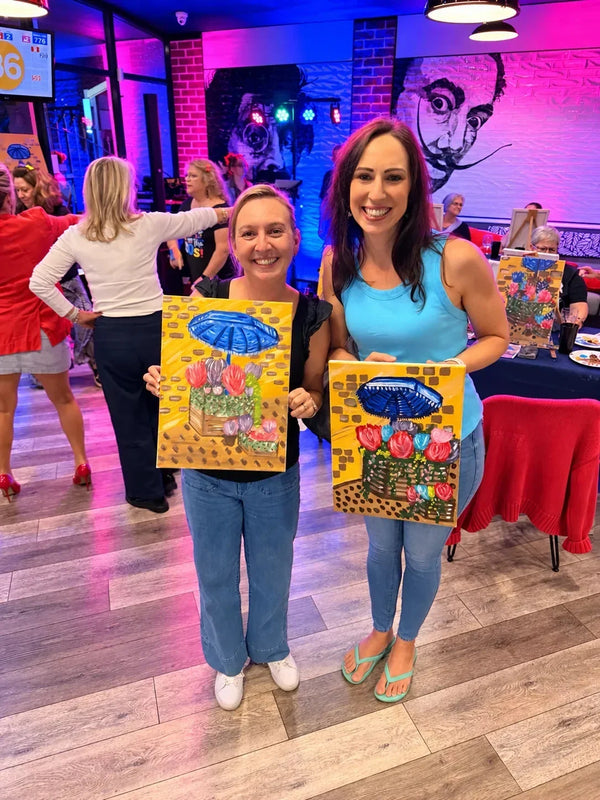
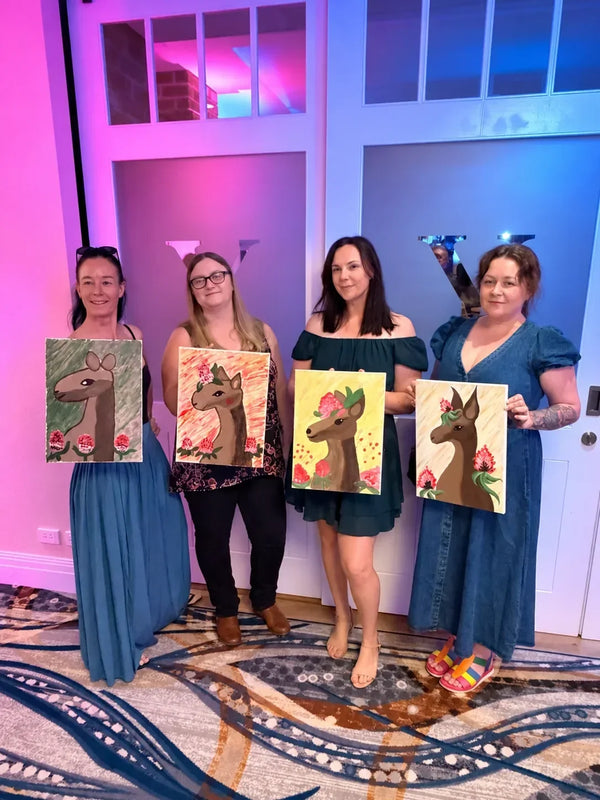
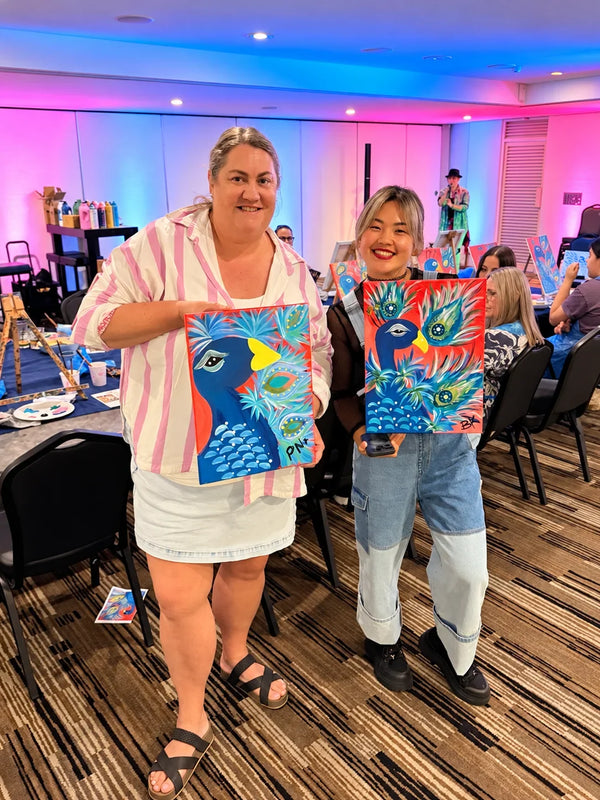
That's exactly what a Paint night is. Paint are peak nostalgia makers, and our calendar runs on decades: singalongs spanning every decade pair from the 60s and 70s through to the 90s and 00s, plus ABBA Night, Aussie Rock and Movie Magic, each designed to drop a room into its favourite years. Guests spend up to 3 hours painting a canvas, singing along with our hosts and a live singer, Lotti, who fronts many of the singalongs, and swapping stories about the last time they heard each song. The singalong is the moment our reviews mention more than any other, and the right decade packs a room: a 70s and 80s singalong in Cessnock had 110 guests booked in January 2026.
For a brand, that means a room of people already in a nostalgic frame of mind, in good company, with no need for you to build the mood. A few hypothetical ways it could play out:
- A heritage biscuit brand presents an 80s and 90s night and slips a reissued pack into each goodie bag.
- A retro-hits radio station takes the goodbye set in the Paint radio session with a sign-off guests recognise from their own car radio.
- A family jeweller celebrating decades in town co-creates a themed night around the year it first opened.
- A revival fashion label designs a canvas that leans into the colours and shapes of the 70s.
Those examples connect to real options. You can present a night or a theme, build a co-created themed night around your own story, or have guests paint your era-inspired design through sponsored artwork. Our hub explains why peak nostalgia makers and heritage brands are such a natural match, and the whole Paint Juicy CONNECT program is laid out there too.
One rule never bends: the night belongs to the guests. A nostalgic brand moment has to add to the fun, never interrupt it.

Nostalgia marketing questions, answered
Does nostalgia marketing only work on older audiences?
No. Younger adults can be just as sentimental about their teenage years as anyone else. Research on music even suggests people can feel nostalgic about eras they never lived through, especially songs their parents played at home. The key is matching the era to the audience rather than assuming "retro" means one particular decade.
Is nostalgia marketing just for heritage brands?
Heritage brands have a head start, but newer brands can still use nostalgia well by celebrating an era their customers love, or by turning up somewhere nostalgia is already happening. The difference is honesty: a newer brand should celebrate the past, not pretend it was there.
How do you stop nostalgia marketing feeling cheesy?
Get the details right, keep it warm rather than mocking, and give the memory a reason to matter now. Cheese usually creeps in when a campaign uses generic retro styling with no real memory behind it. Ask people from that era to check your work. If they light up, you're on track. If they wince, start again.
Can a small business use nostalgia marketing?
Absolutely, and often more convincingly than a big brand. A business that has served the same town for years has real history to share: old photos, original signage, long-time customers with stories. It can also join a local themed night out rather than paying to create the mood from nothing.
Bring your brand to the singalong
If your brand has a past people love, or belongs in a decade they still sing about, there's a room waiting for you. Tell us which era suits your story and which towns matter, and we'll suggest the themes and nights that fit. Why Paint Juicy CONNECT? Because Paint Juicy connects!
Start a nostalgia campaign conversation
Curious which decades are coming up? Each state lists its themed nights separately.
See what's on in each state
Keep reading
-
Marketing to Gen X women: how to reach the generation raised on the 80s and 90s
Marketing to Gen X women? Learn who she is, what shaped her, how she uses media and the moves that earn her trust. Read the practical guide. -
Marketing to baby boomers in Australia: how to earn the trust of a generation that's seen every trick
Marketing to baby boomers in Australia? Who they are, how they fill their week, how they use the internet and what earns their trust. Read the guide. -
Brand Takeover Events and Themed Nights: Make a Whole Paint Night Yours
Take over a whole Paint Juicy night, gift seats to clients or staff, or build a themed night around your brand's story. Start planning yours.