

They grew up as television arrived in the lounge room, saw rock and roll go from scandal to golden oldie and have sat through a lifetime of ad breaks. They can smell a gimmick at fifty paces. Marketing to baby boomers in Australia is less about clever tricks and more about substance, clarity and service, delivered by people who treat them as the experienced customers they are.
This guide covers who Australia's boomers are, how different they are from one another, what the public data says about their working lives, their weeks and their screens, and the practical moves that earn their business. It's written for men and women alike, because this is a generation, not a gender. Most of it will help even if you never set foot in a Paint Juicy room, and we'll show where we fit near the end.
Who counts as a baby boomer in Australia?
An ABS media release on Census generations, dated 28/06/2022, defines Baby Boomers as people born from 1946 to 1965. In 2026 they turn anywhere from 61 to 80.
It's still a very big group. The 2021 Census counted more than 5.4 million Baby Boomers, 21.5 per cent of the population, only a whisker ahead of the Millennials. Back in the 1966 Census, nearly two in every five people (38.5 per cent) were Baby Boomers. A generation that once was the market now often watches advertisers chase younger people instead. That's a gap any business can step into.
Twenty birth years, three different customers
A site manager born in 1965 and a great-grandmother born in 1946 share a generation label and very little else. Planning for "boomers" as one block is how campaigns end up pleasing nobody. A more useful split looks like this:
| Born (age in 2026) | Where many are in life | What to lead with |
|---|---|---|
| 1961 to 1965 (61 to 65) | Often still working, eyeing retirement, possibly still helping adult children | Saving time, quality, planning for the next chapter |
| 1952 to 1960 (66 to 74) | Many newly or recently retired, travelling, volunteering, grandparenting | Experiences, flexibility, things to do with friends |
| 1946 to 1951 (75 to 80) | Settled routines, community ties, more interest in convenience and service | Reliability, easy access, a real person to talk to |
Treat the middle column as a starting point, not a rule. Retirement timing varies enormously, which the data below makes clear.
What fills a boomer's week
For many, work still does
The idea that every boomer is on permanent holiday doesn't survive contact with the numbers. The ABS Retirement and Retirement Intentions release, published 31/10/2025, found that people aged 45 and over who retired in 2024-25 did so at an average age of 63.8. Those still working intend to retire, on average, at 65.6. The youngest boomers, then, are frequently at their desks, on the tools or running their own businesses. Pitch them weekday matinees and you'll miss.
Caring and volunteering take a big slice
The same 2021 Census release found around one in eight Baby Boomers (12.8 per cent) cared for other people's children, often their grandchildren, and two-thirds of those carers were women. The ABS also named boomers as the generation most likely to volunteer and provide unpaid help to others.
Two lessons follow. First, a retired calendar is not an empty calendar. Grandparent days, volunteer shifts and appointments get locked in early, so give boomer customers notice and a choice of times. Second, those clubs, community groups and volunteer rosters are some of the strongest word-of-mouth networks in any town. Earn a good name there and it spreads.
Health is a factor, not the whole story
The ABS reported 7.4 per cent of Baby Boomers needing assistance with core activities, against 2.8 per cent across the younger generations. That's a real difference and it matters for access, venues and service. It also means the great majority of boomers don't need that assistance. Build in comfort and accessibility as a courtesy to everyone, and keep frailty out of your imagery unless your product is genuinely about care.

Boomers are online, just not always the way you are
If your plan assumes older Australians don't use the internet, it's out of date. The ACMA's report on how Australians use the internet, released in February 2026, found 88 per cent of people aged 75 and over used a mobile phone to go online in 2025, up from 18 per cent in 2017. That age band takes in the oldest boomers, and the report found every younger age group was even more likely to go online by mobile.
The same report shows where the gaps sit. People aged 75 and over were less likely than any younger group to make video calls (22 per cent, against 58 per cent of all adults). Being online doesn't mean being comfortable with every app, every login or every new way of doing things.
What that means in practice:
- Digital channels work, so use them: search, email, social and your own website all reach boomers.
- Never make the app the only door. Keep a phone number, an email address and a way to book without creating an account.
- Write instructions for someone smart who hasn't used your system before, because that's exactly who's reading.
- Put the important details, like price, dates, location and parking, in text rather than buried in an image or a video.
How to market to baby boomers: moves that work
Lead with substance
Boomers tend to want to know what they're getting and why it's worth it. How long has the business been around? Who makes it? What happens if something goes wrong? A clear answer to those questions does more than a slogan ever will.
Make a real person easy to reach
A name, a phone number that's answered and a shopfront or office she or he can walk into are sales tools in their own right. Hiding behind a contact form tells this customer you'd rather not hear from them.
Design for reading comfort
Generous type, strong contrast, plain buttons and no pale grey text on a white background. None of this is "old people design". It's good design for everyone, and it costs a boomer customer nothing to feel welcome on your page.
Let the product choose the language
If you sell retirement villages or hearing services, age-related words make sense. Otherwise, "seniors", "elderly" and "golden years" put a birthday where the benefit should be. Talk about what the product does and let the reader decide whether it suits them.
Cast real people
Skip both stock extremes, the frail hand on a walking frame and the grandparent skydiving in a matching tracksuit. Show people in their sixties and seventies doing what they actually do: working, travelling, coaching, gardening, catching up with friends.
Give them something to try
A sample, a demonstration, a free first session, a test run in a setting they enjoy. This generation would rather judge for itself, and the hands-on moment is often where the decision gets made.
Reward word of mouth
Clubs, community groups, golf days, church halls, choirs and neighbours over the fence. Make it easy for a happy customer to bring a friend, and say thank you when they do.
Myths about boomer customers, checked
| The myth | What's closer to the truth |
|---|---|
| "They're not online" | The ACMA found 88 per cent of people 75 and over went online via a mobile phone in 2025 |
| "They've all retired" | People 45 and over who retired in 2024-25 averaged 63.8, so the youngest boomers are often still working |
| "They have endless free time" | Caring, volunteering and appointments fill plenty of retired weeks |
| "They're all the same" | Twenty birth years, three life stages, every kind of household |
| "They only want the past" | Nostalgia works, but so does showing them what's new |
On that last row: nostalgia can be a powerful tool with this generation, and our nostalgia marketing guide explains how to use it well. Just don't make it your only note.
A boomer-friendly campaign checklist
- Have you split your boomer audience by life stage, not one 20-year age band?
- Can a customer reach a real person by phone without hunting for the number?
- Is the key information readable on a phone held at arm's length?
- Can someone book or buy without downloading an app or creating an account?
- Does the imagery show people in their sixties and seventies as they actually live?
- Have you given enough notice for people with busy, pre-booked weeks?
- Is there a hands-on moment where they can try before they buy?
- Is there an easy way to bring a friend?
Where Paint Juicy fits
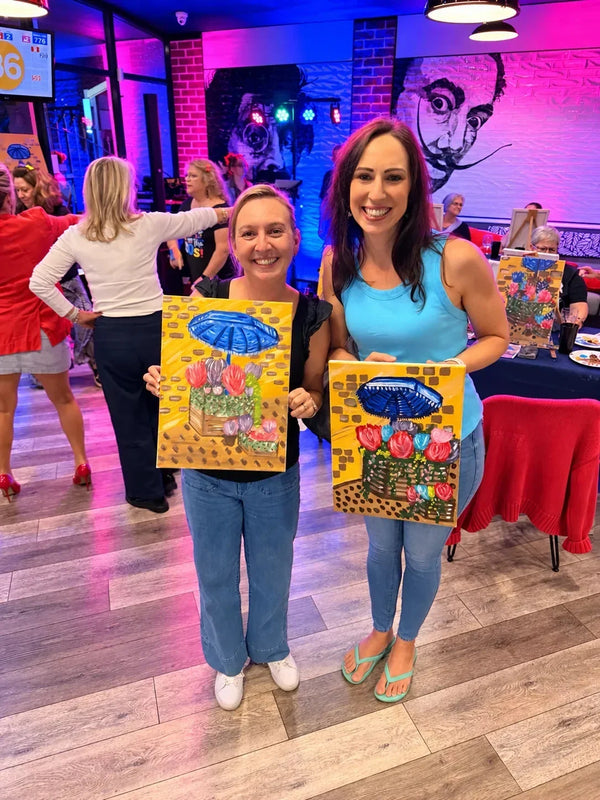
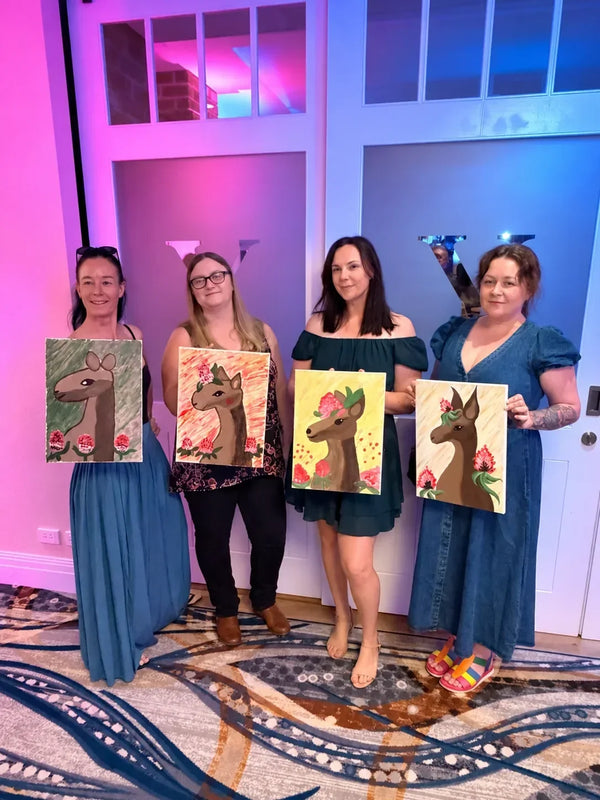
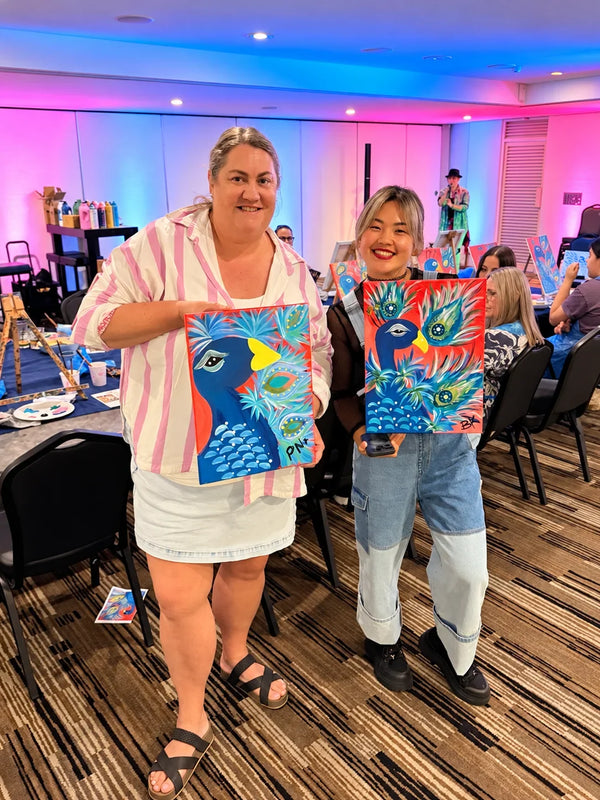
Our rooms are full of people who have been to a few parties in their time. Paint Juicy's nights of up to 3 hours mix painting, live hosts and a singalong, and our 60s and 70s singalongs play the songs boomers grew up with. Most guests are women, ranging from their thirties into their nineties, and plenty book with their mums, so a boomer mum and her Gen X daughter can easily end up sharing a table. Give this crowd its own decades and it shows up: Armidale booked 101 guests into a 70s and 80s singalong in December 2025.
That makes Paint a natural channel when your boomer customer is often a woman, or when you want to reach several generations of one family in a single room. Through Paint Juicy CONNECT, a brand can present a themed night or an in-room moment, or book a whole night for its own clients as a thank you. Businesses with a lot of boomer clients, like planners and brokers, will find more specific ideas in our marketing ideas for financial planners and mortgage brokers.
For the generation coming up behind, see how to market to Gen X women. And because a lot of boomers have lived in a quiet house for years, our piece on advertising to empty nesters covers that life stage across every generation.

Questions about marketing to baby boomers
Is social media worth it for reaching baby boomers?
Yes, as one part of the mix. Plenty of boomers use social media to keep up with family, local groups and community news, so a well-targeted local campaign can reach them. Pair it with channels that let them check you out properly, like your website, reviews and a phone number that gets answered.
Which words should I avoid in ads aimed at baby boomers?
Anything that defines them by age rather than interest, unless your product is specifically about later life. "Seniors", "elderly", "young at heart" and "golden years" tend to sound patronising. Plain, confident language about what the product does will always land better.
How do I make my website easier for older customers?
Use larger body text, strong contrast and clear buttons. Put opening hours, prices, location and contact details in plain text that's easy to find. Let people buy or book as a guest. Then ask a few older customers to try it while you watch, and fix whatever trips them up.
Are baby boomers loyal customers?
Many stick with a business for years when the service is good, and many will walk when it isn't. Loyalty is earned through reliability, honesty and being easy to do business with, not assumed because of a birth year. Treat every repeat visit as something to keep earning.
Should my campaign speak to boomers and their adult children at the same time?
Sometimes, and it can work beautifully. Gifts, celebrations, travel and shared nights out often involve two or three generations. Just make sure each group sees itself in the message, rather than the parents being cast as an afterthought.
Put your brand in the room
If boomer customers matter to your business, some of them are already booking seats with their friends and daughters at Paint nights in both Queensland and New South Wales. Send us a note about your product, the towns you trade in and the customers you want to reach, and we'll show you which themes and nights make sense. Why Paint Juicy CONNECT? Because Paint Juicy connects!
Start a conversation about reaching baby boomers
Curious which singalongs are coming up near you? Each state keeps its own lineup.
See what's on in each state
Keep reading
-
Advertising to empty nesters: what changes when the house goes quiet
Advertising to empty nesters? See how time, money, home and social life shift when adult children move out, and how to market to it. Read on. -
Nostalgia marketing: why throwback campaigns work and how to do one well
Why nostalgia marketing works, how to make a throwback campaign feel genuine, and the mistakes that make it cringe. Read the plain-English guide. -
Regional Marketing Statistics for Australia: QLD, NSW and NT by the Numbers
Regional marketing statistics for QLD, NSW and NT in one place: people, spending, ad budgets and women 45+, every source linked. Check the numbers.